Where it started
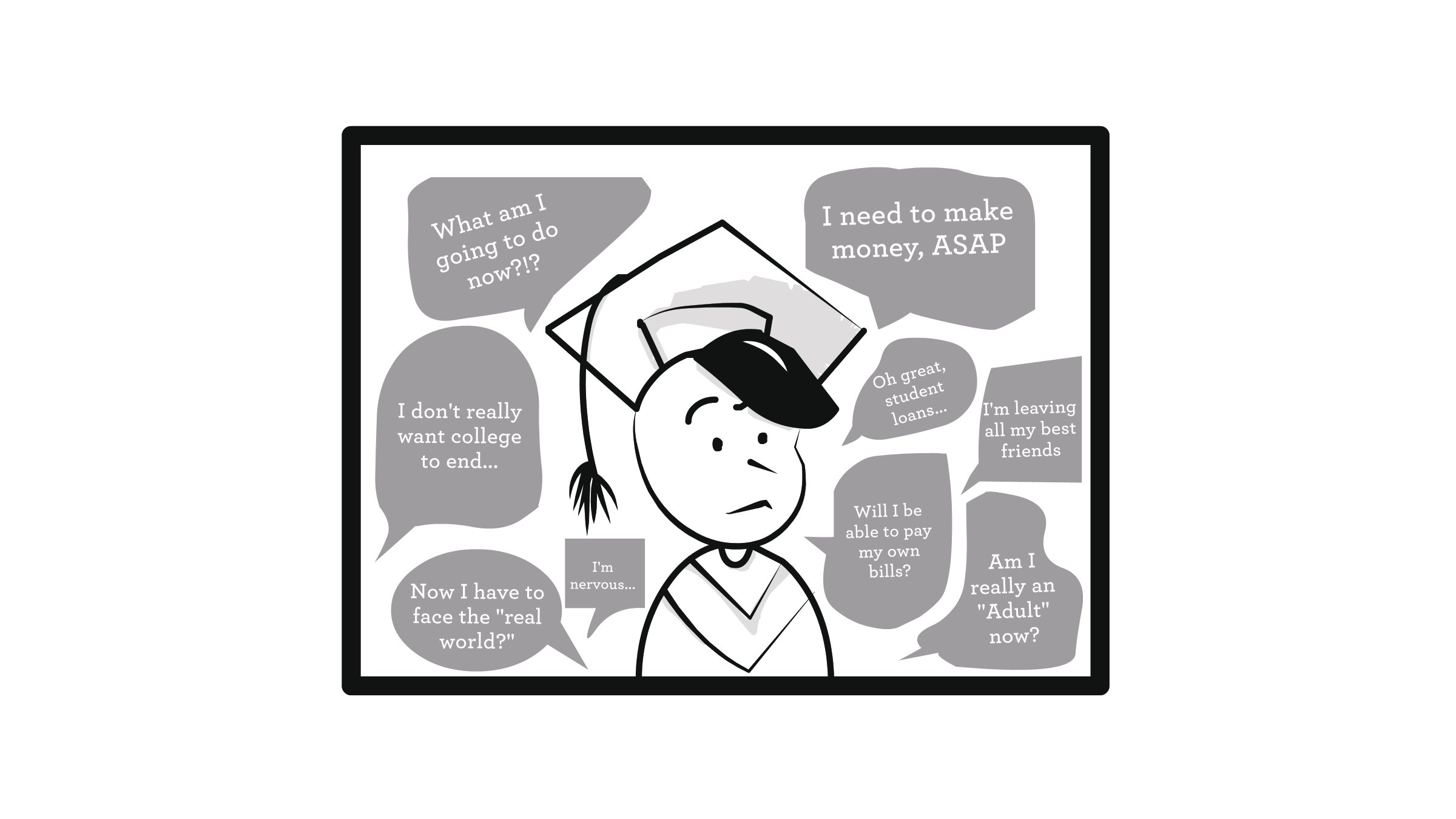
When young people leave home for the first time — whether for college, a new job, or a new city — food becomes unexpectedly loaded. It's no longer just about nutrition or preference. It's about budget, identity, loneliness, and the gap between who they were at home and who they're becoming. The question I set out to explore: how do teenagers and young adults actually make food decisions, and what's getting in the way?
Role: Researcher (Collaborative) | Methods: Intercept Interviews, Informational Meetings, In-Depth Interviews, Visual design and photography
Research
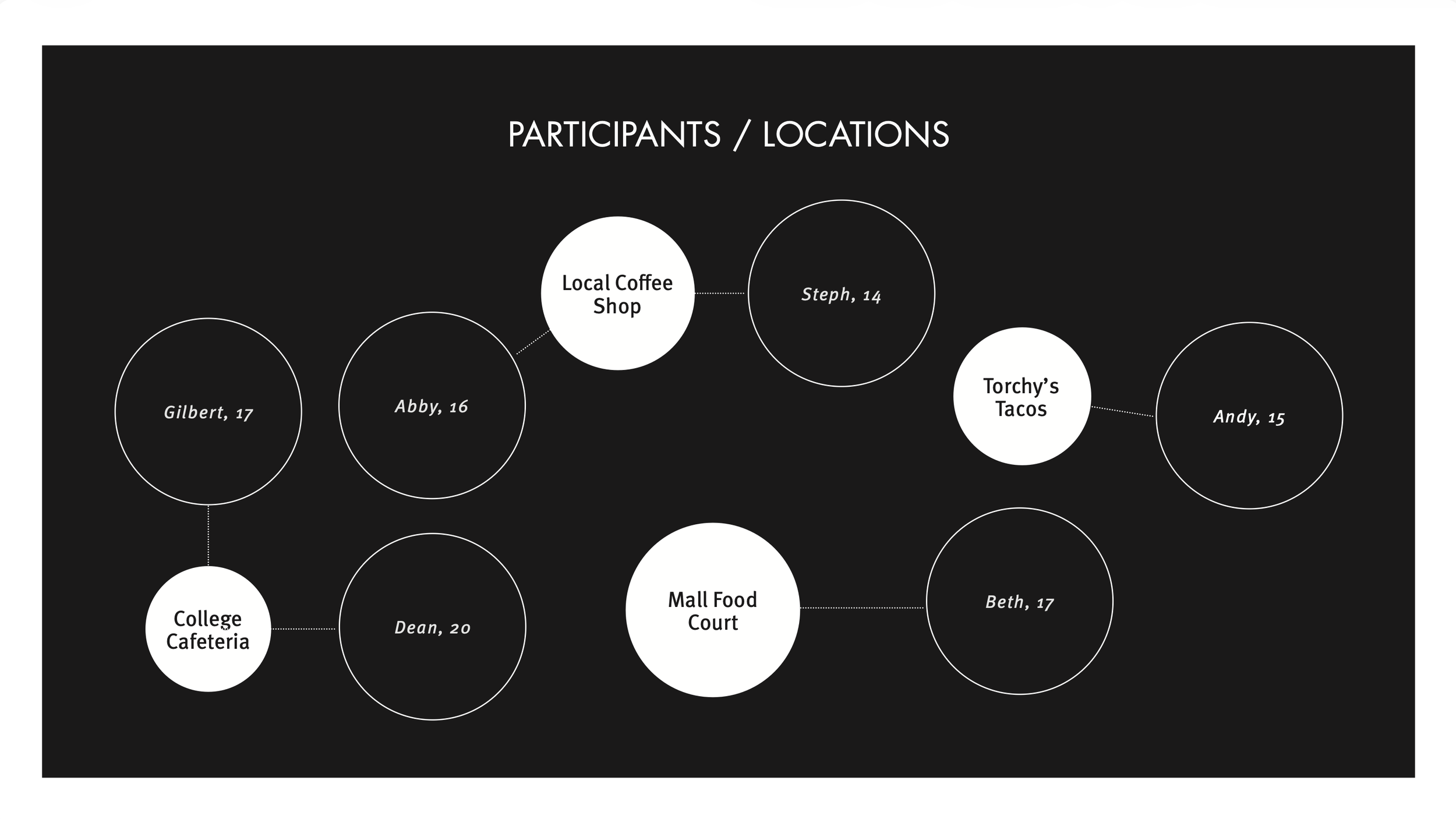
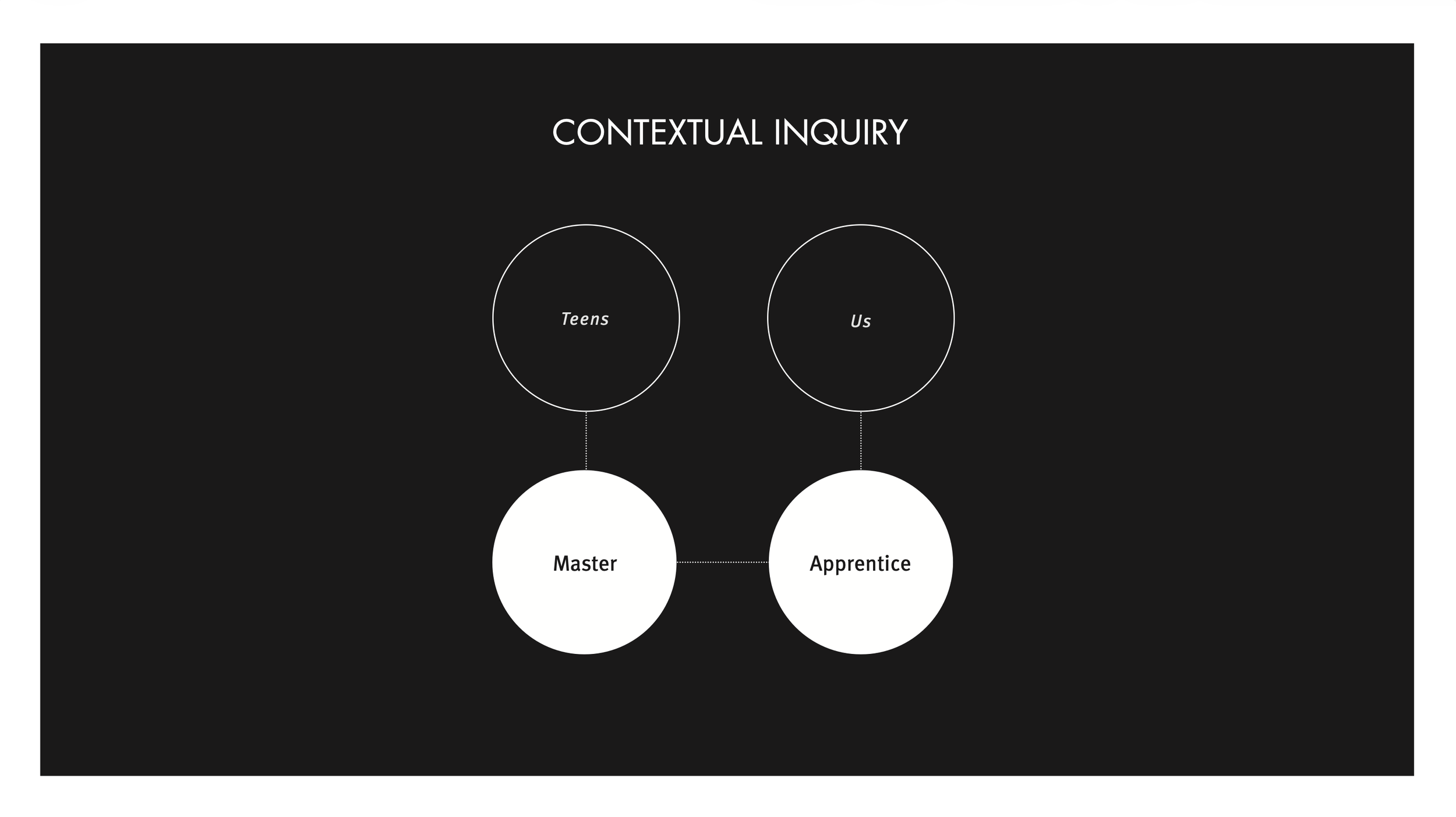
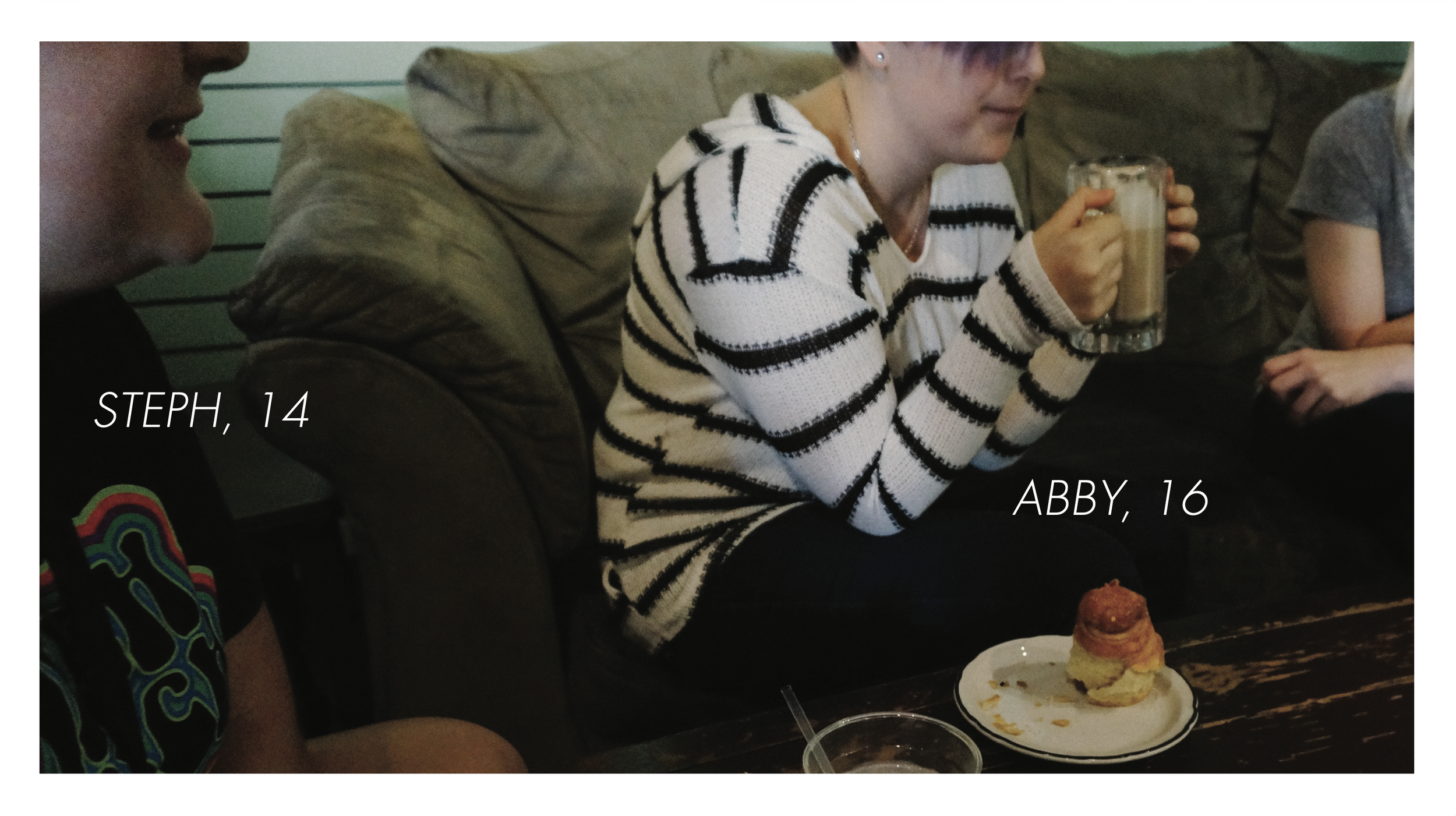
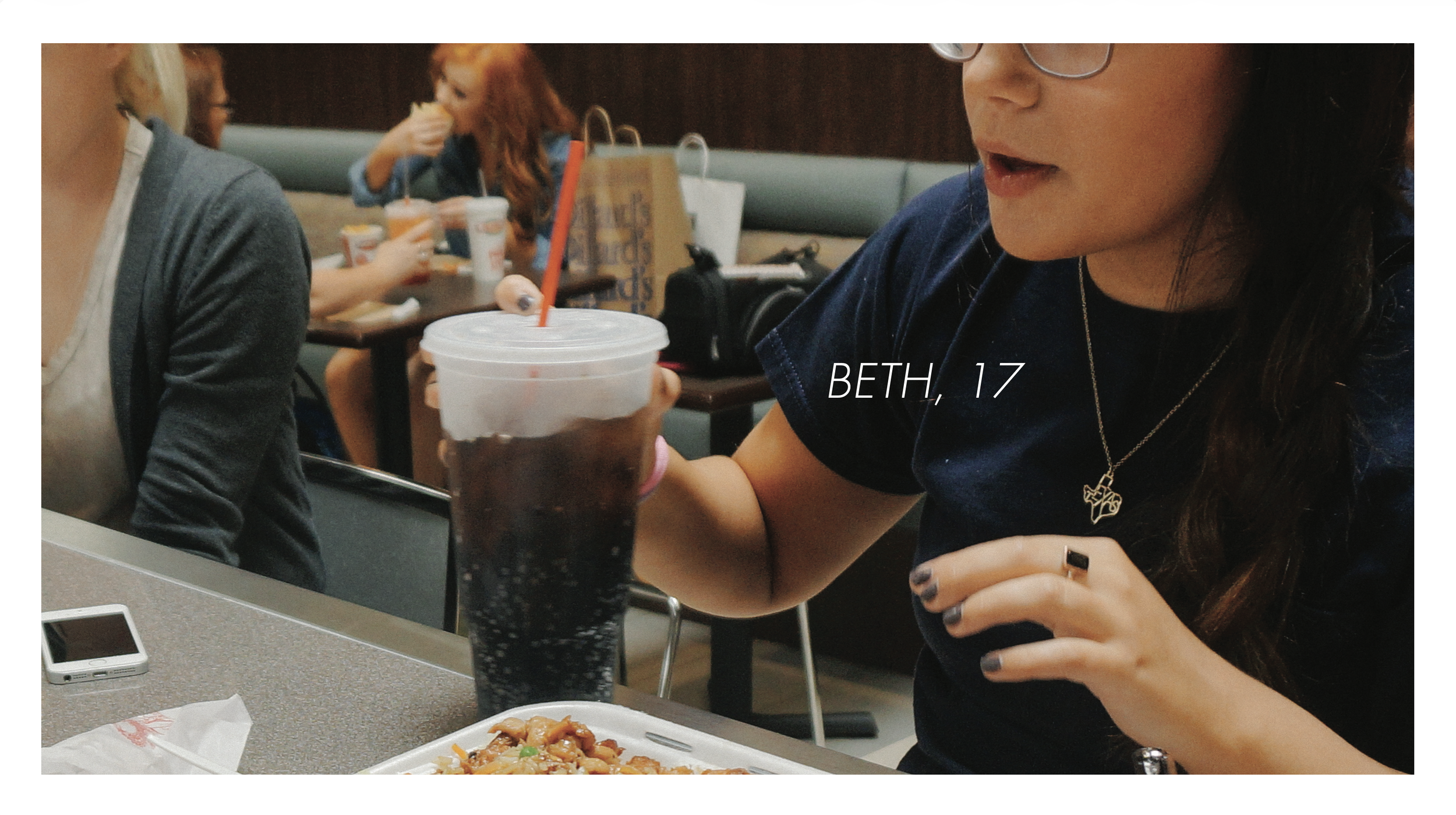
I conducted contextual inquiry sessions with six participants ranging in age from 14 to 20, meeting them where they actually ate — a mall food court, a taco spot, a college cafeteria, a local coffee shop. The goal was to observe and listen in context, not in a sterile interview setting.
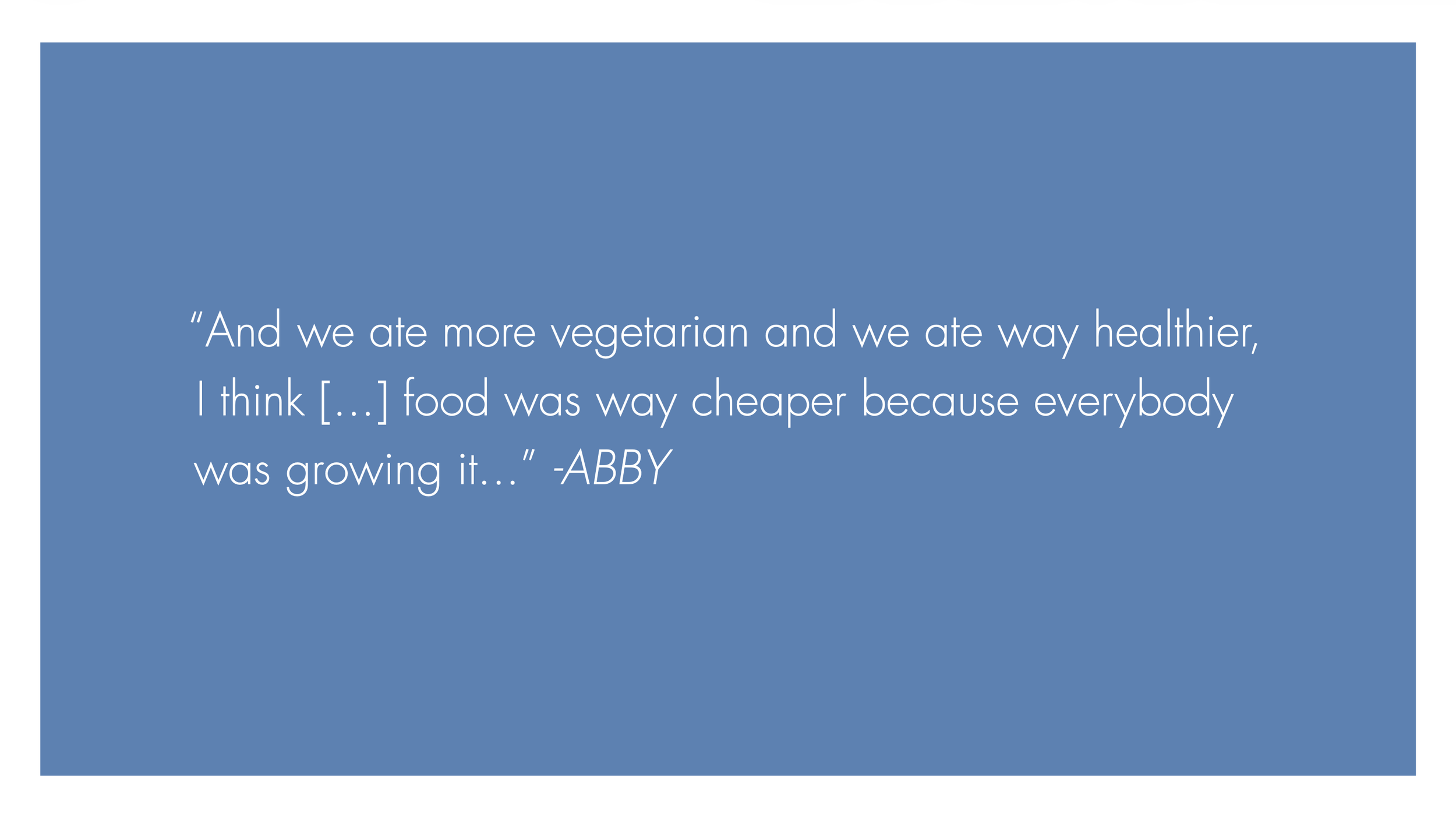
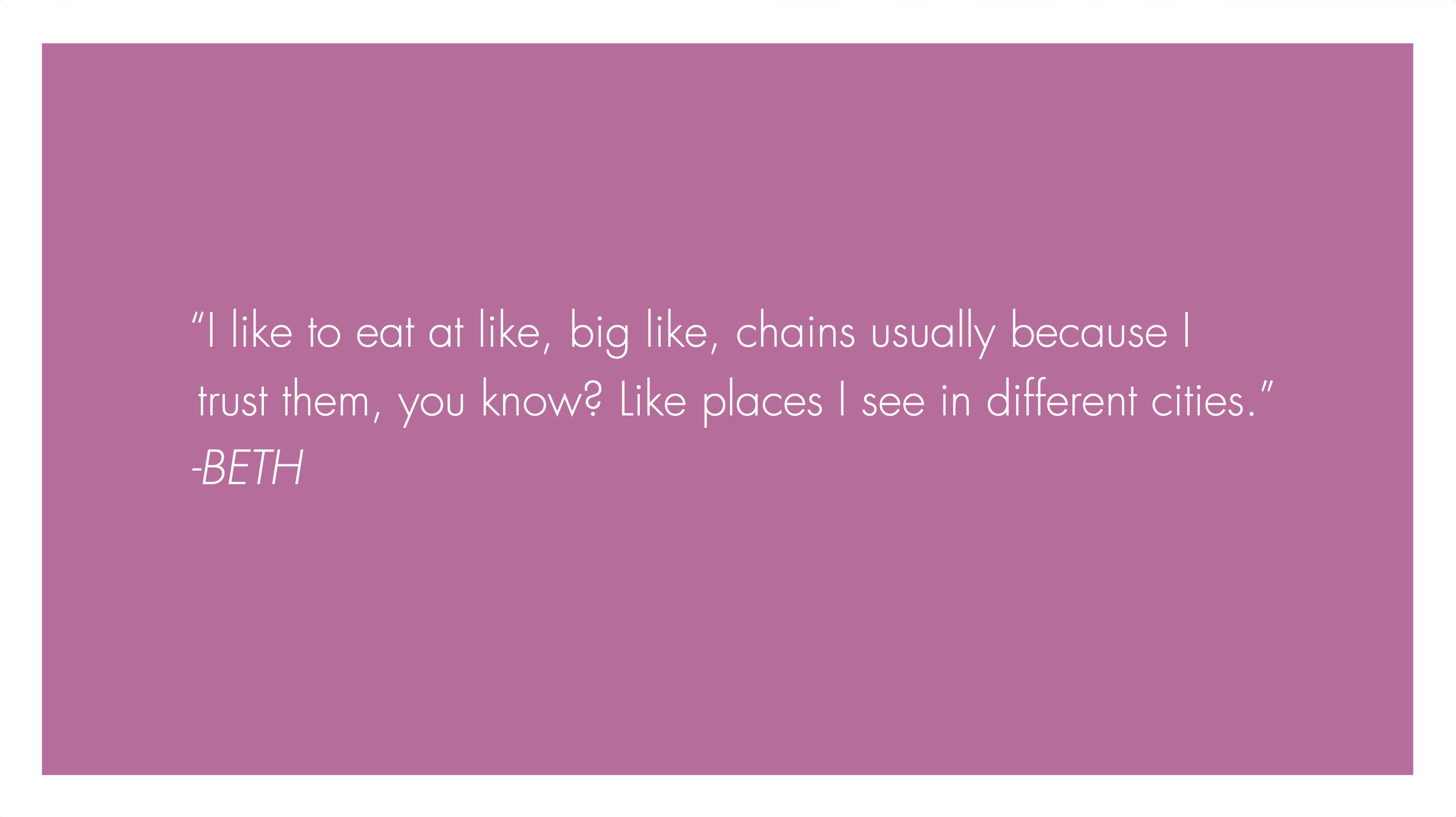
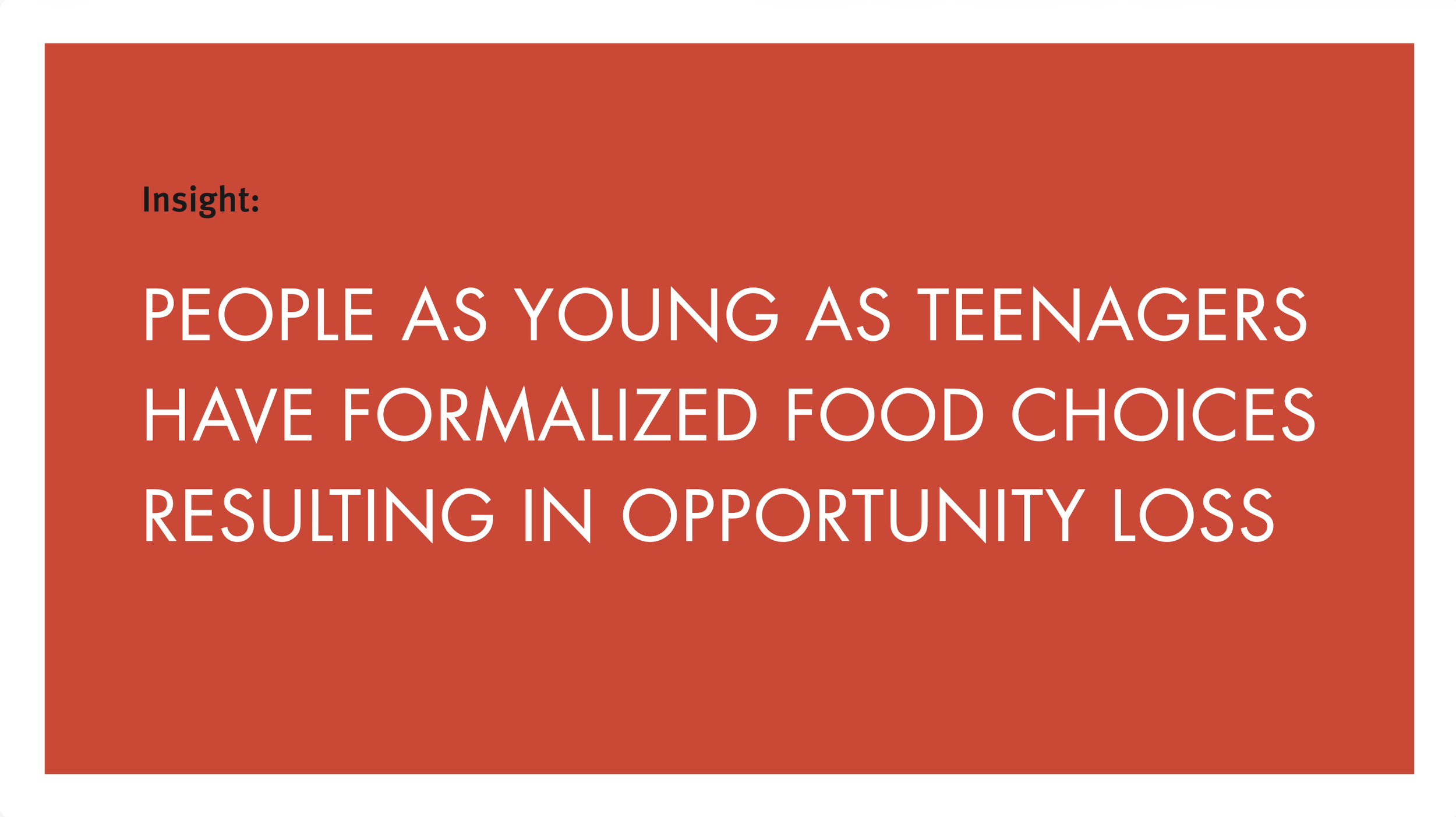
What emerged was more emotionally complex than I expected. One participant recalled how her family used to grow their own food and eat vegetarian — and how much she missed that simplicity. Another defaulted exclusively to national chains because familiarity felt like safety. Across participants, I kept seeing the same pattern: food choices had already calcified, even in teenagers. They weren't exploring — they were retreating to what felt known.

Synthesis & Insight
Three insights surfaced from the research:
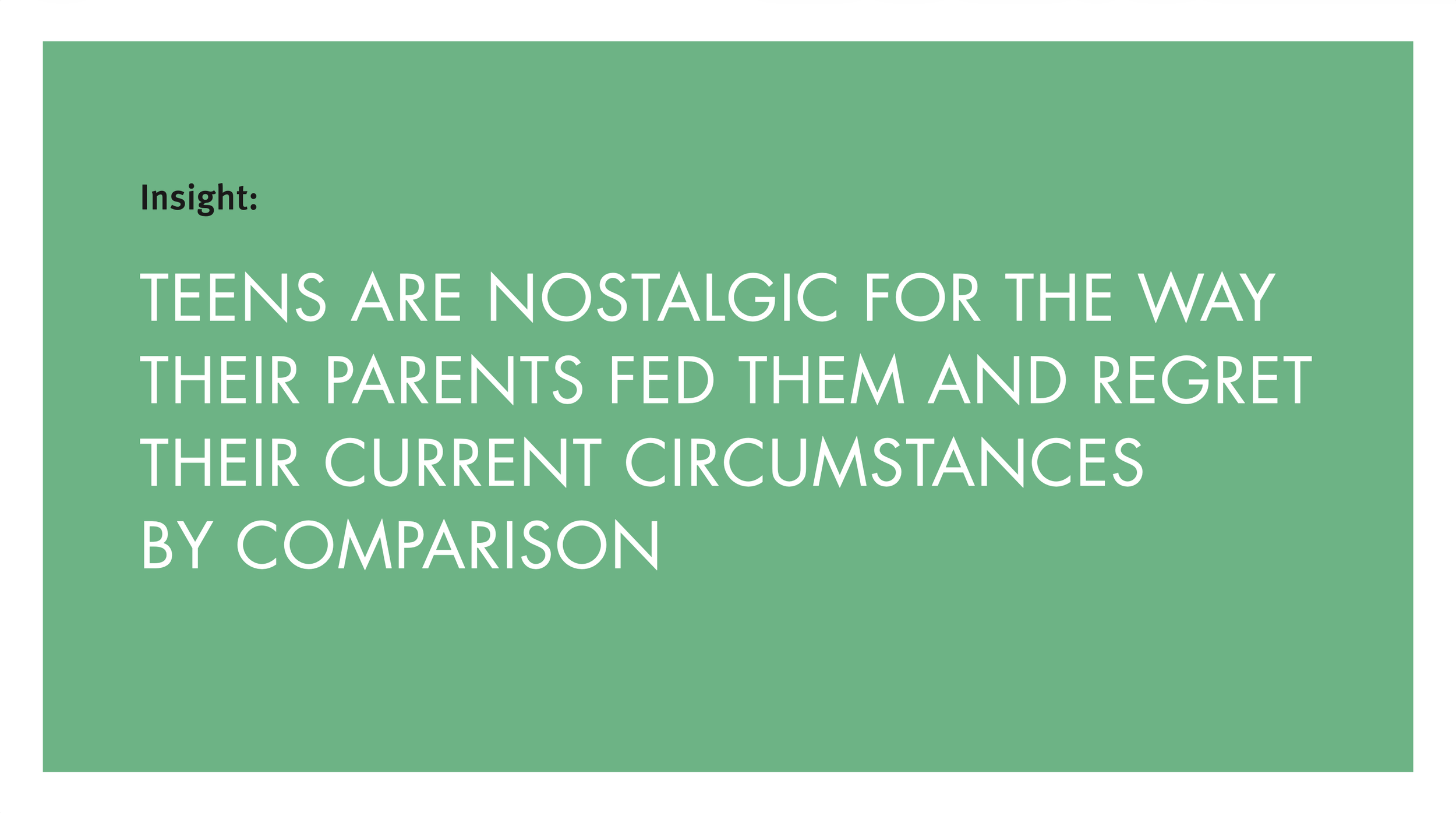
Teens are nostalgic for how they were fed growing up, and feel a quiet loss when they can't replicate it
Even by 17, food preferences had become rigid enough to create real opportunity loss
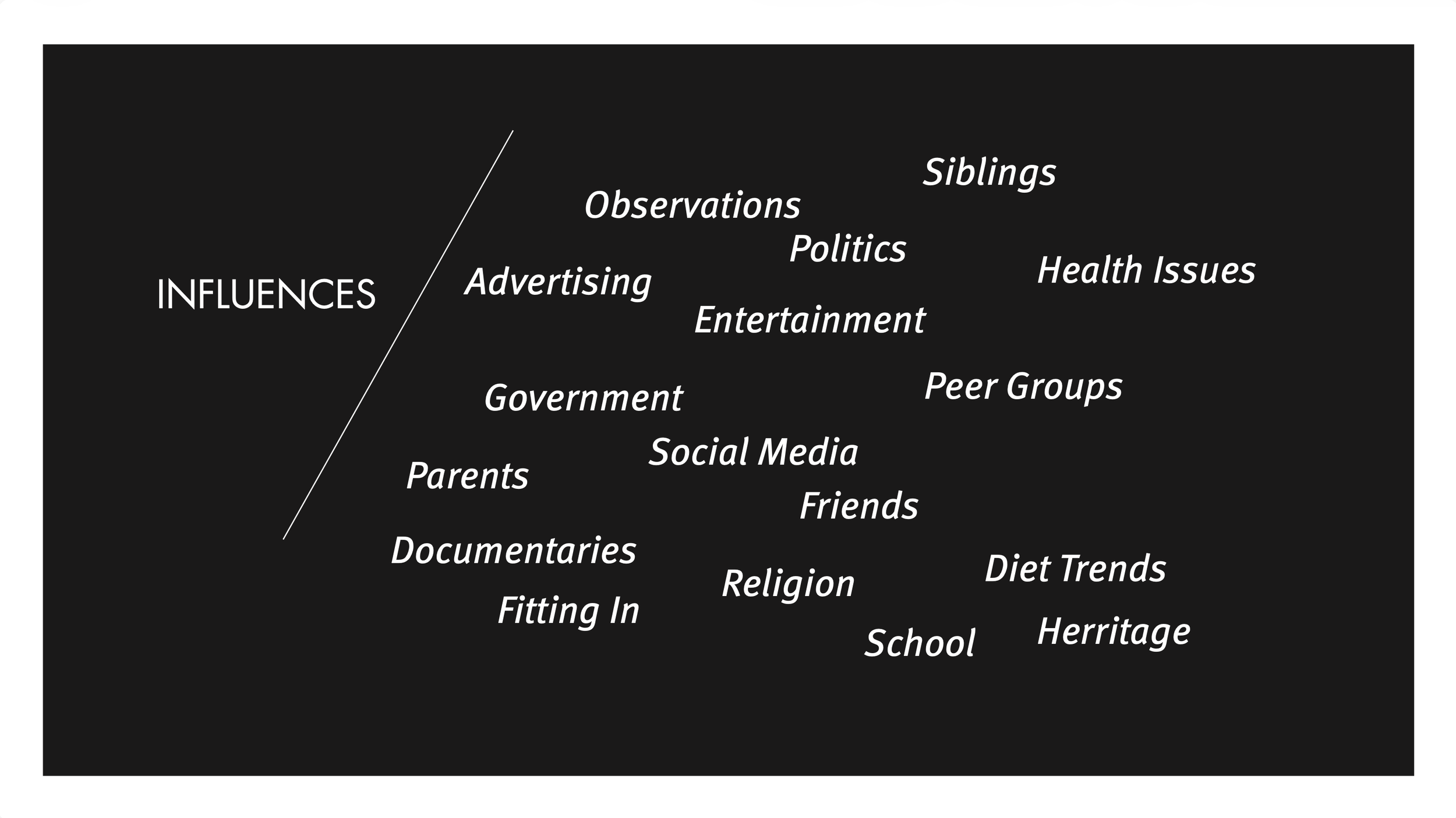
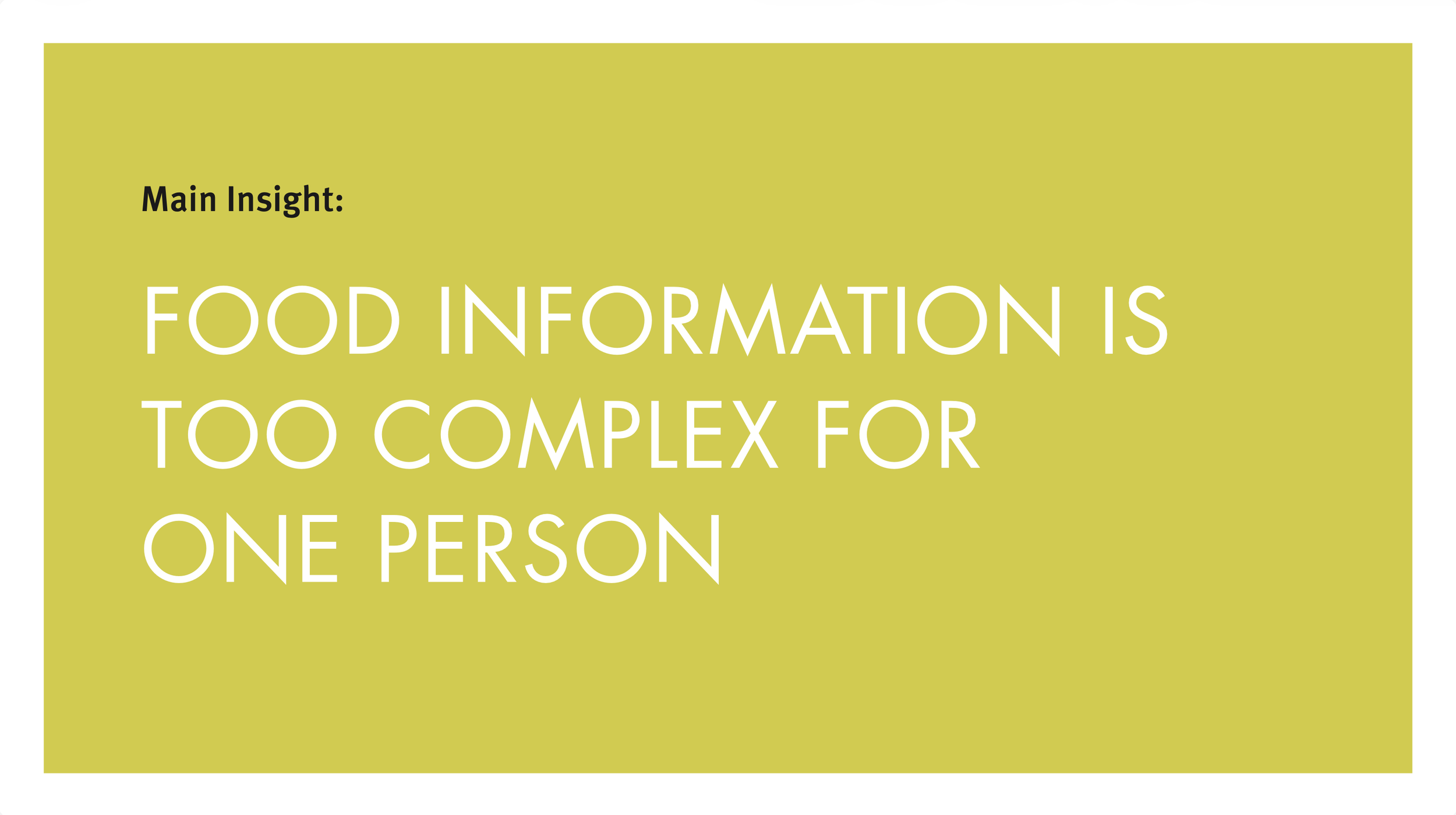
The volume of influences shaping food decisions — parents, advertising, social media, peer groups, health trends, religion — is too complex for any one person to navigate alone
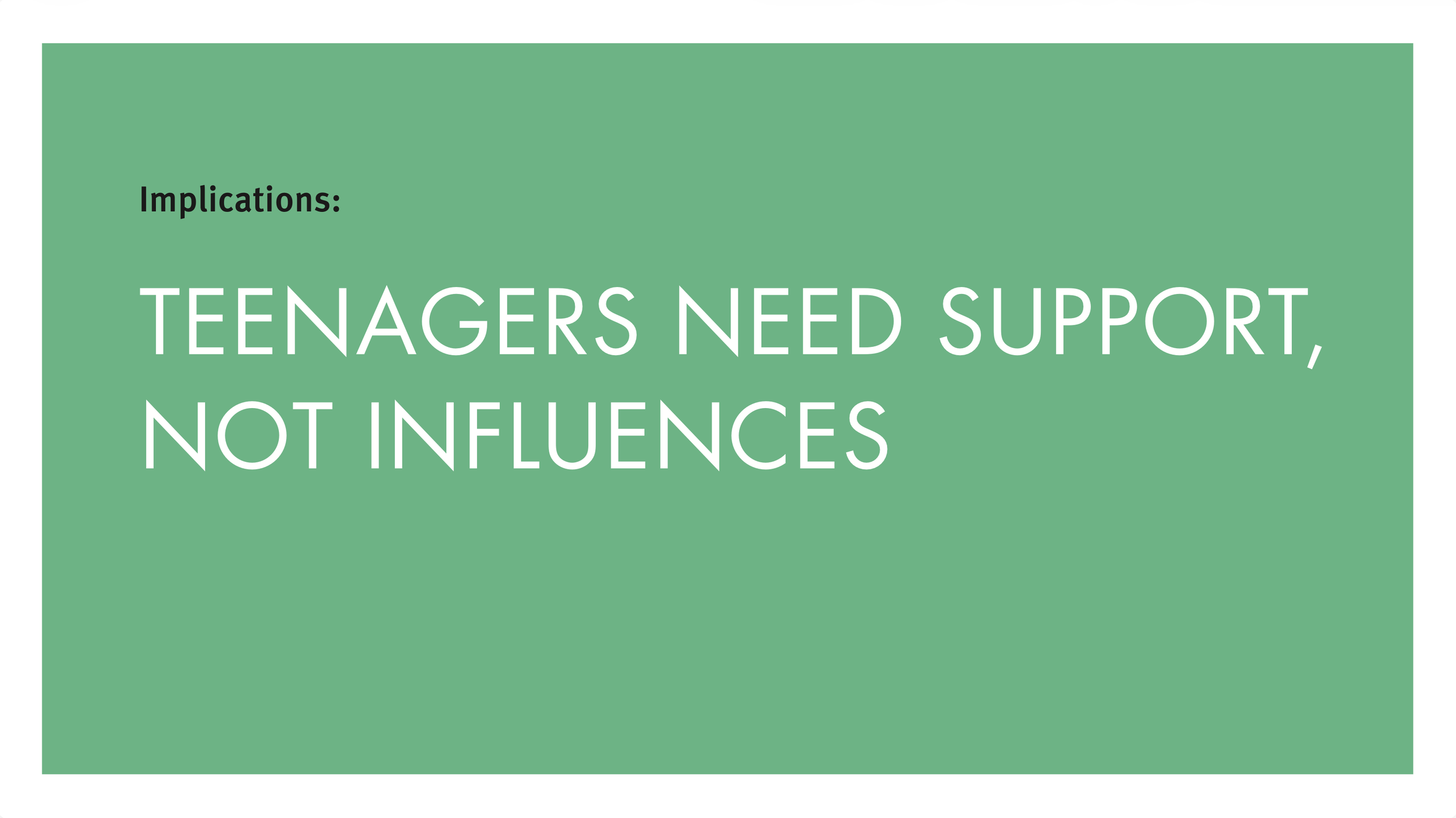
The throughline: young people don't need more food information. They need support in discovering what's possible.
Design Concept: Homing
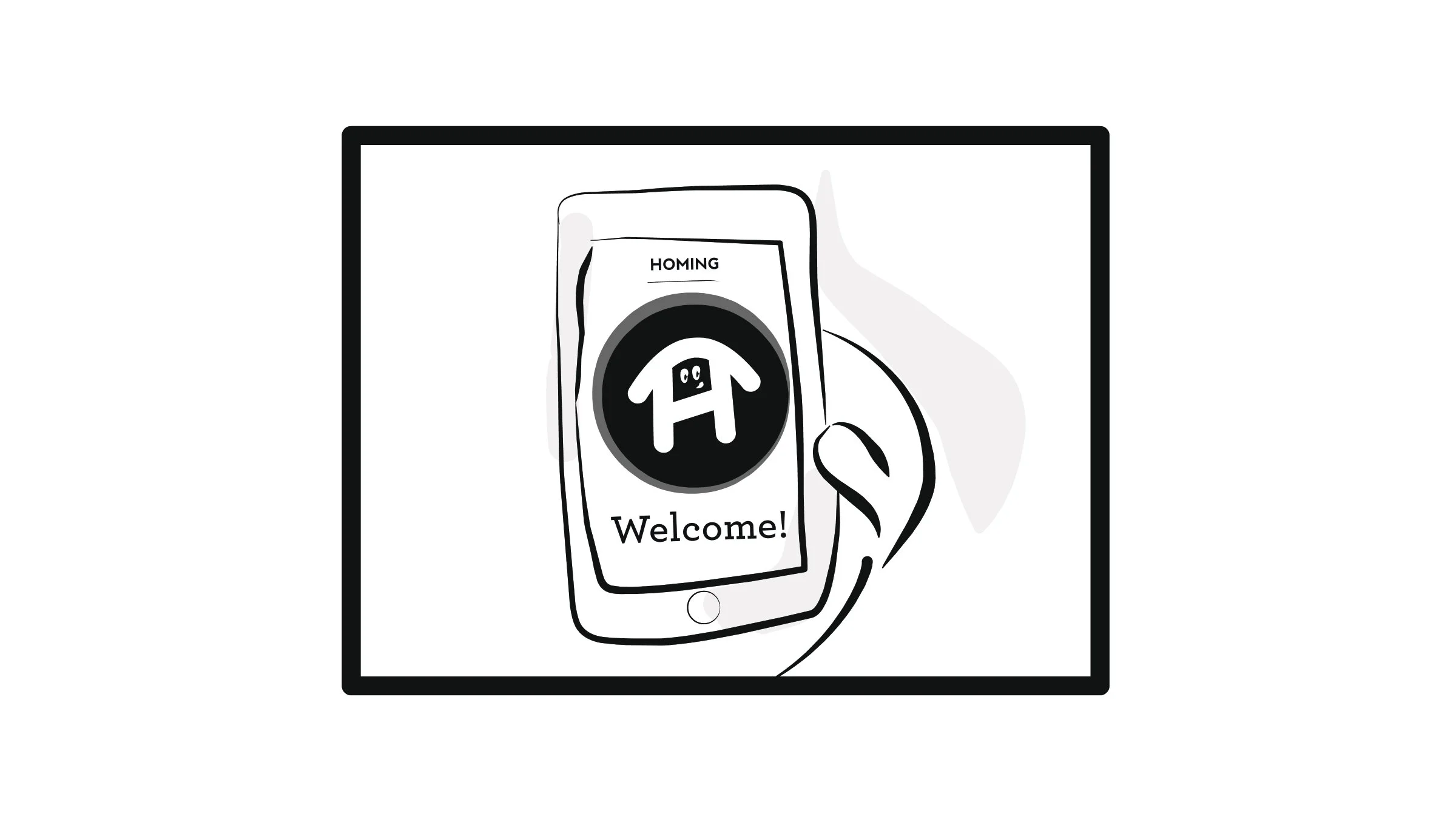
The design response was Homing — a mobile app for young adults navigating a new city for the first time. The name was intentional: it's about making somewhere new feel like home, through food.
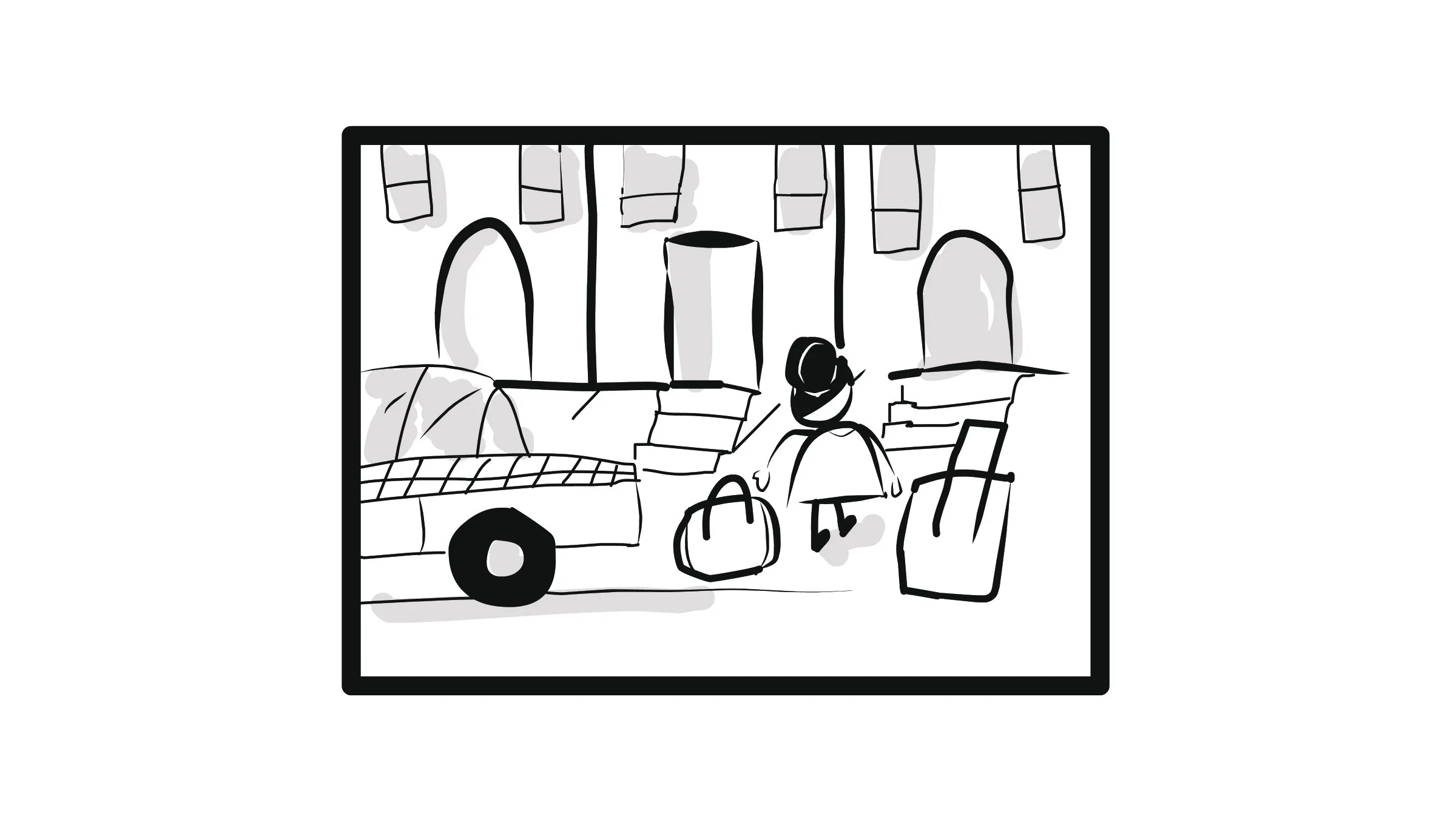
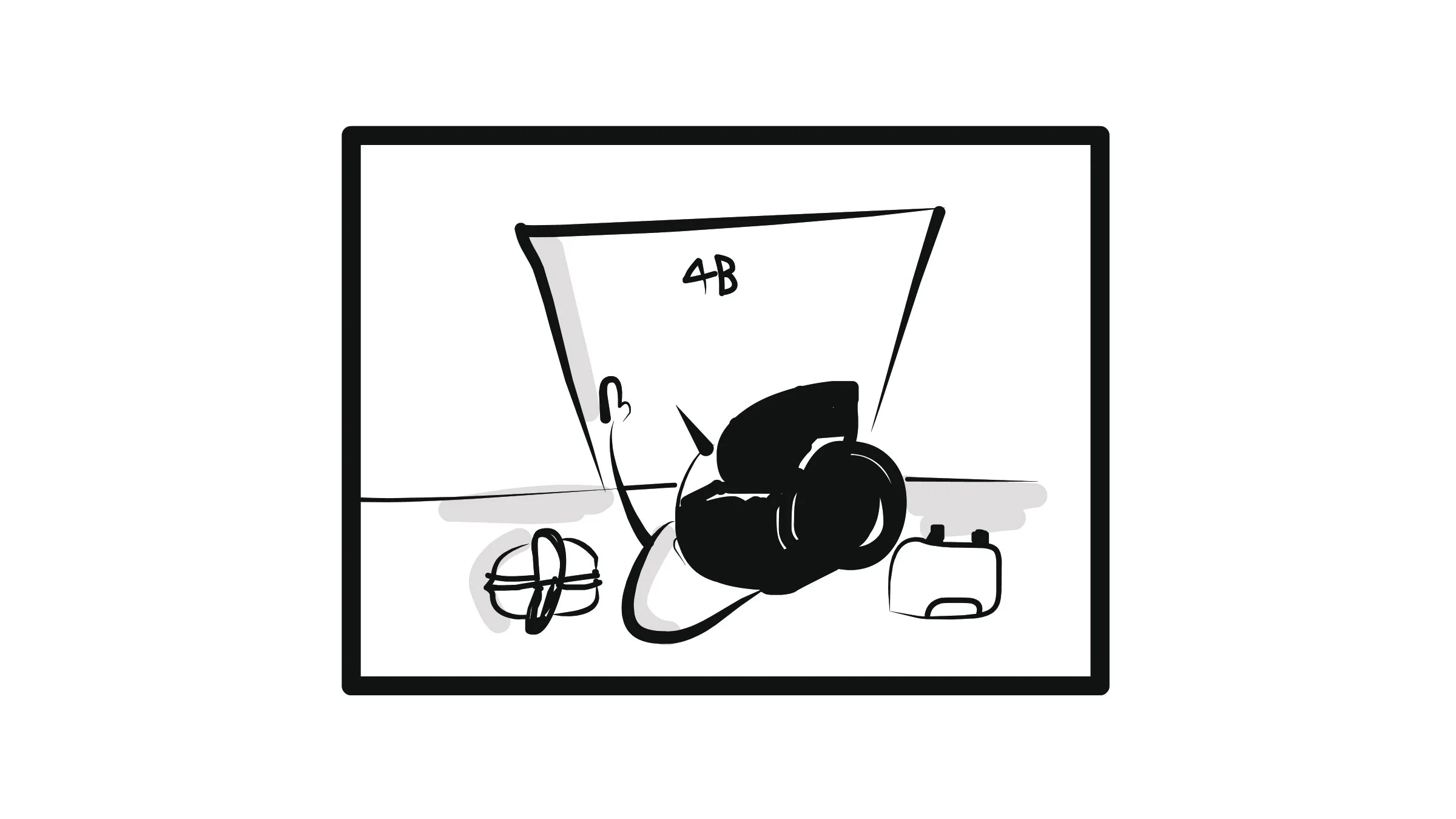
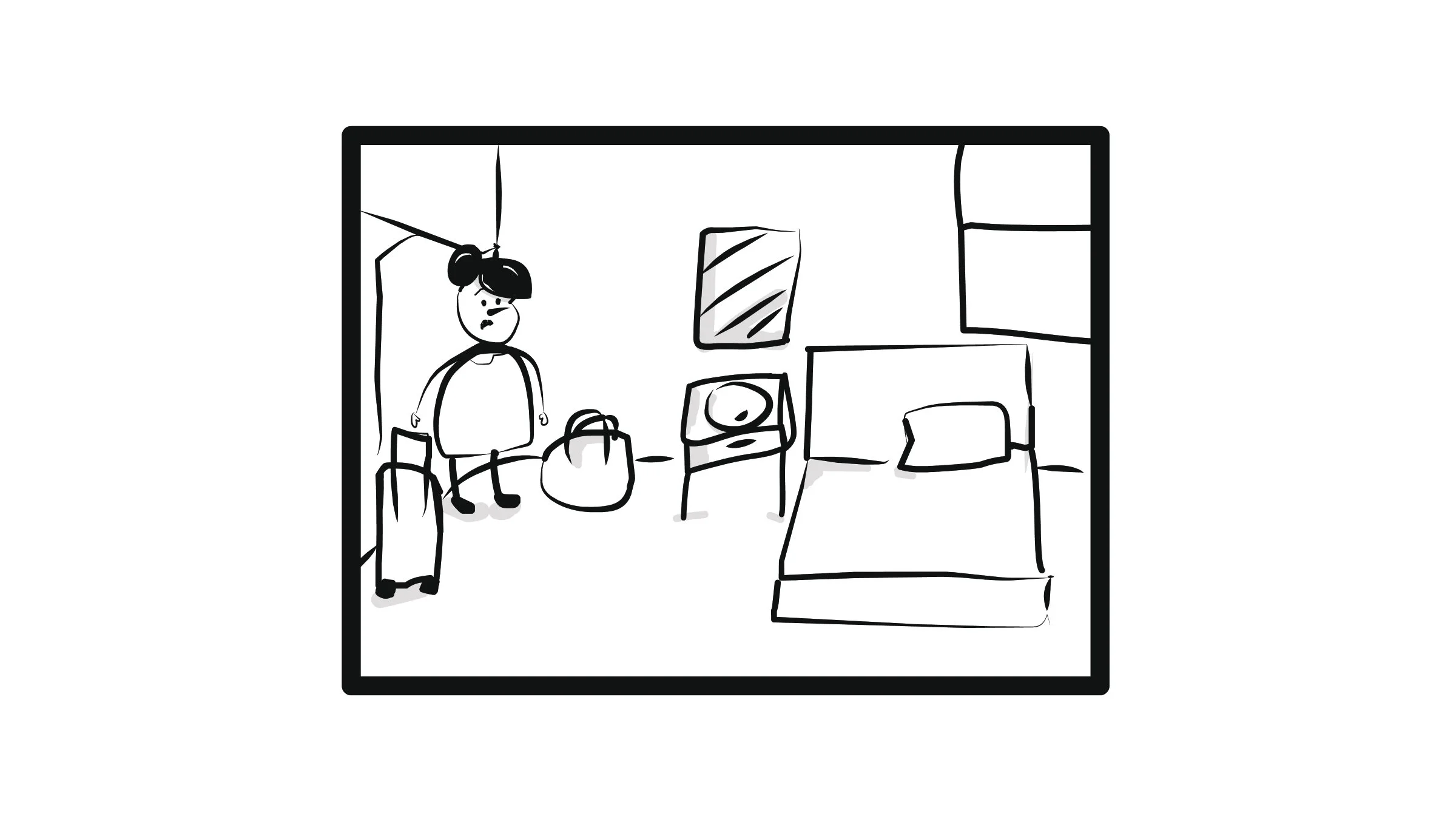
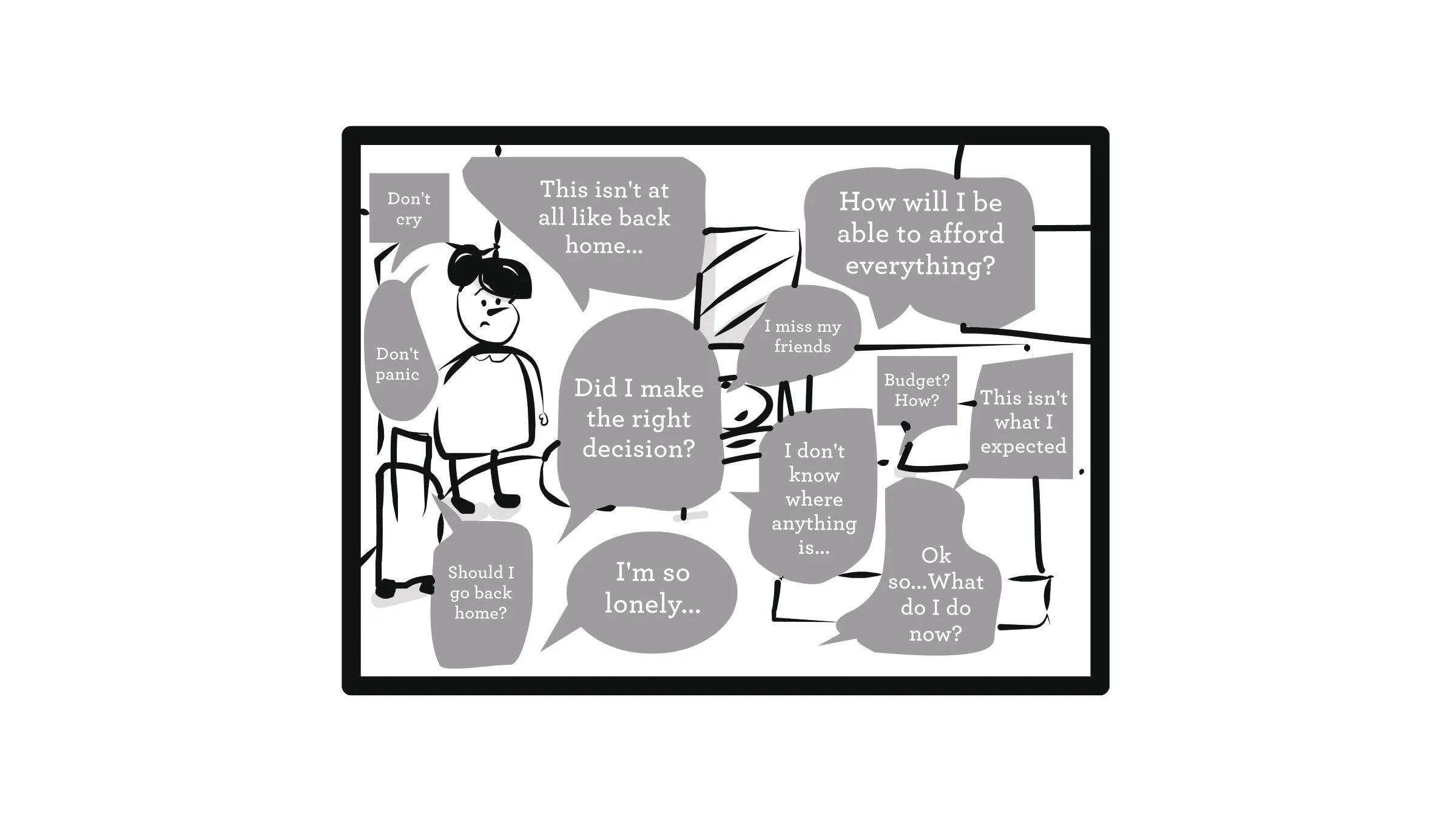
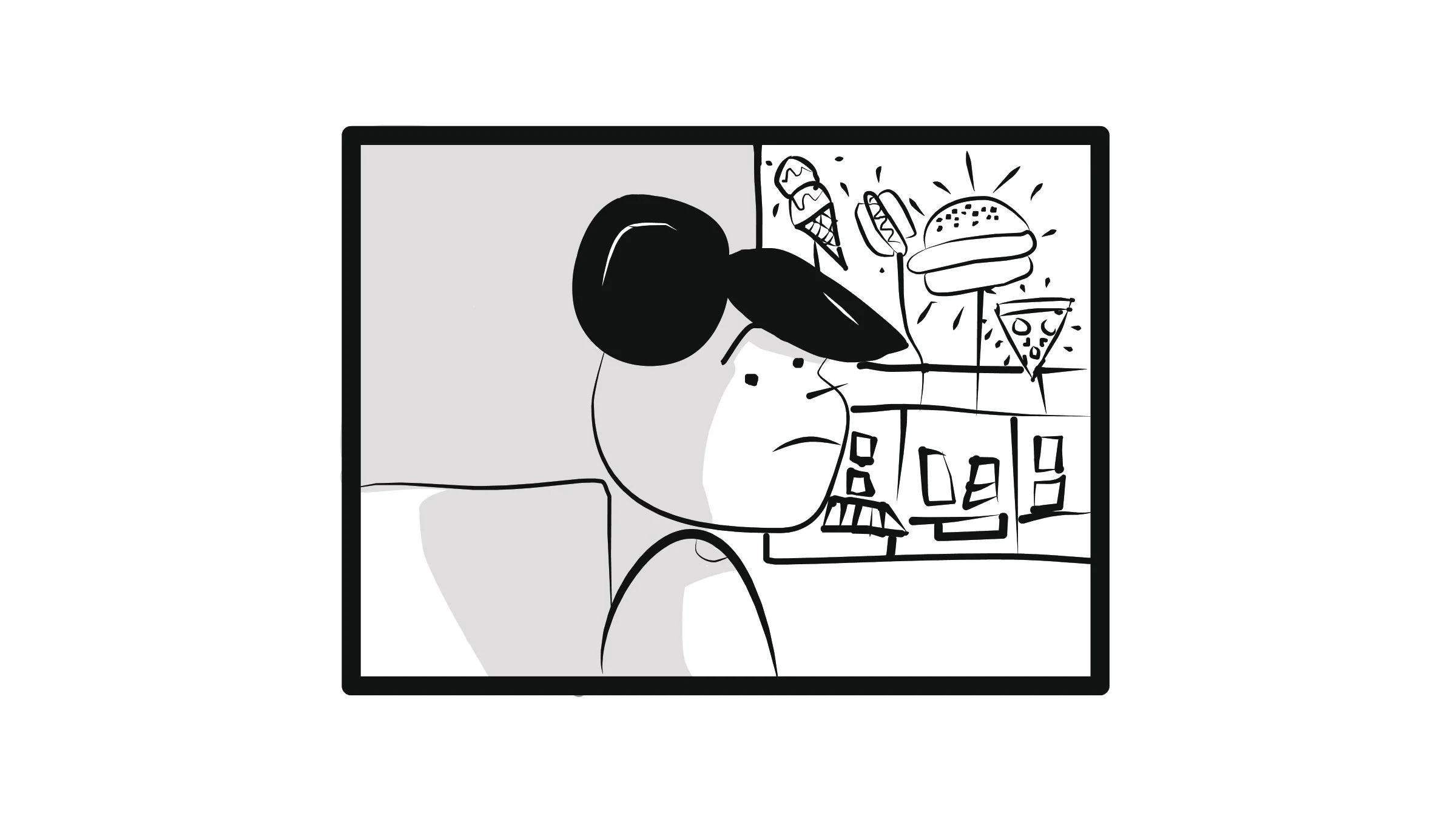
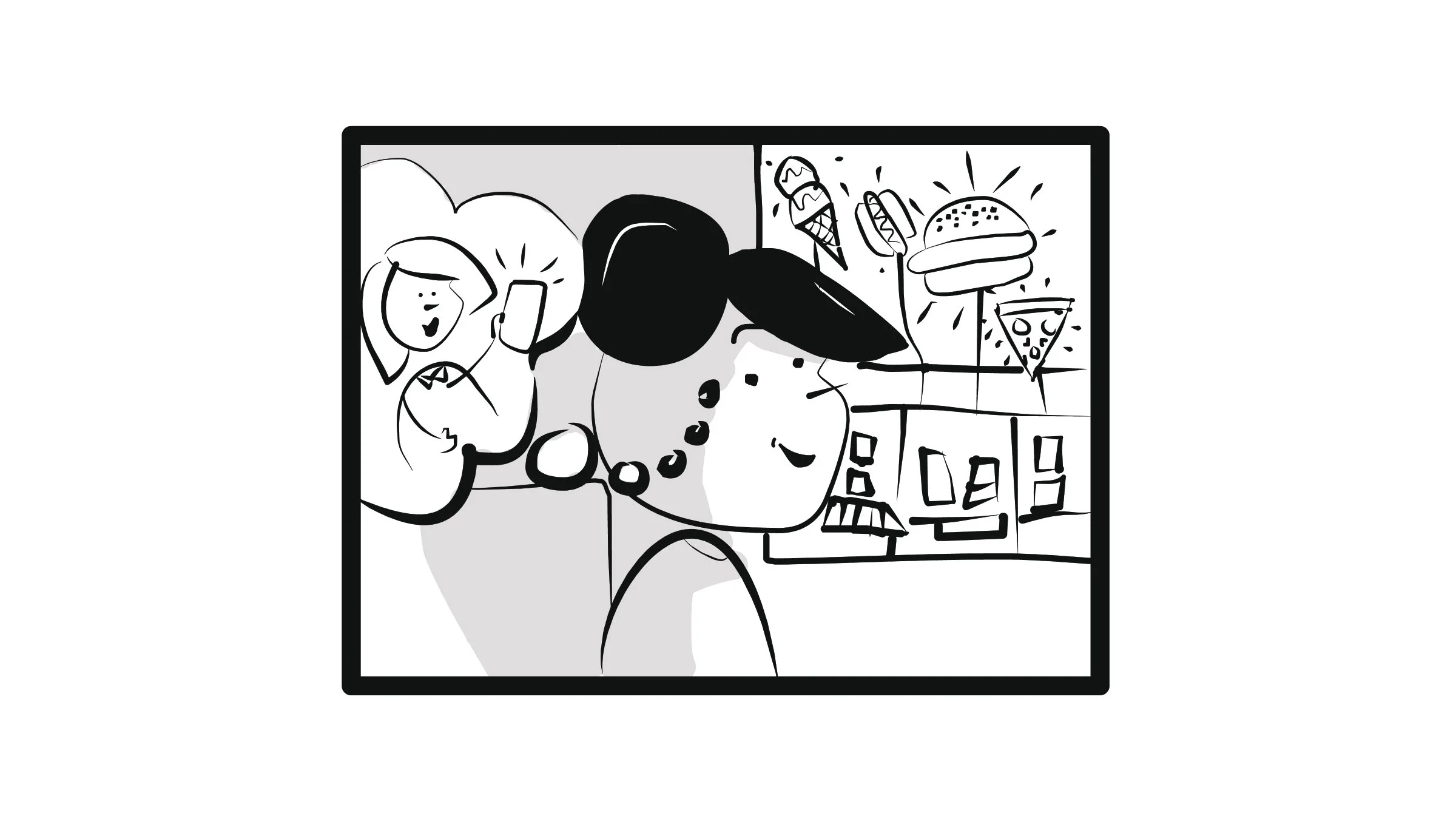
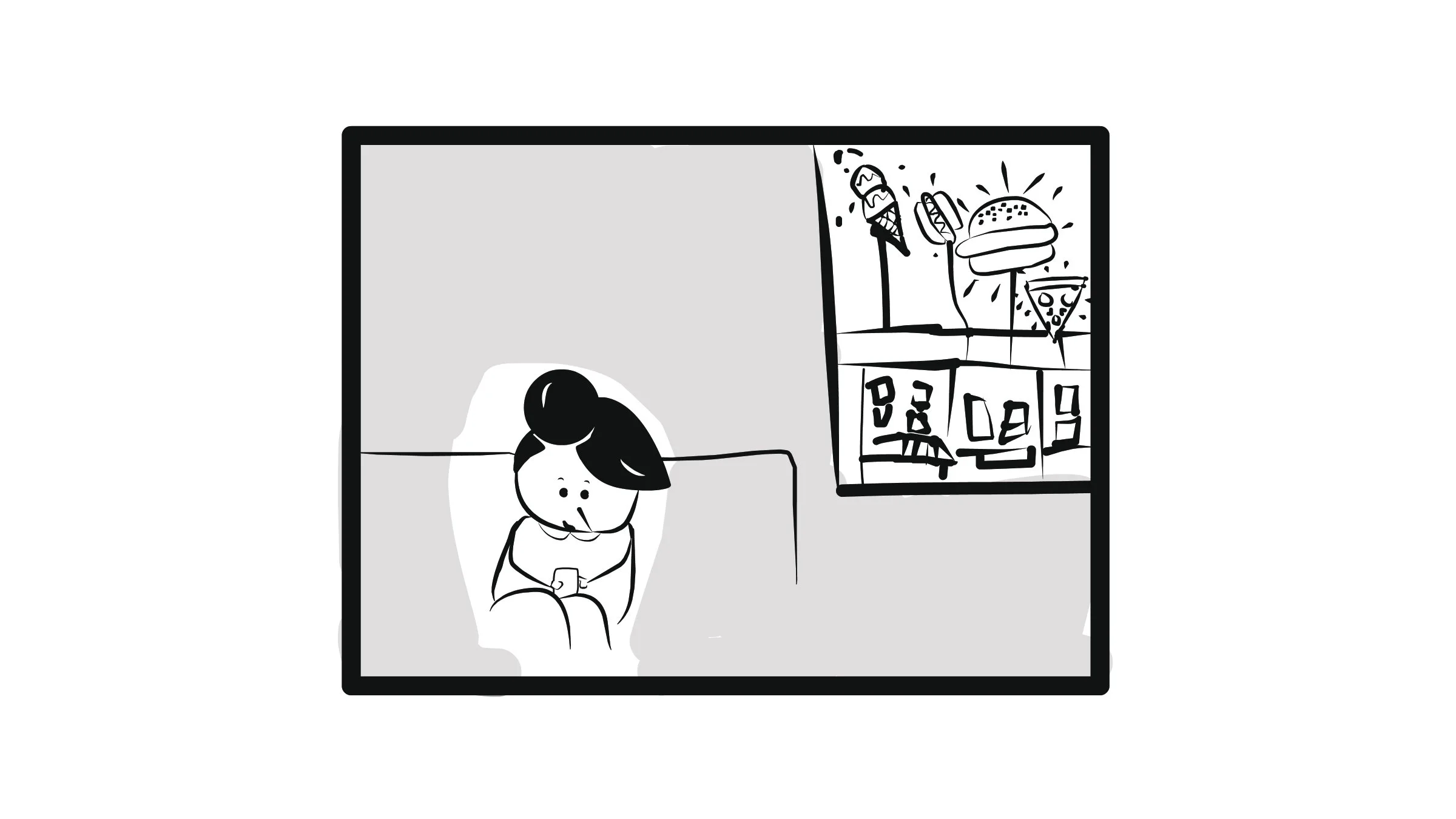
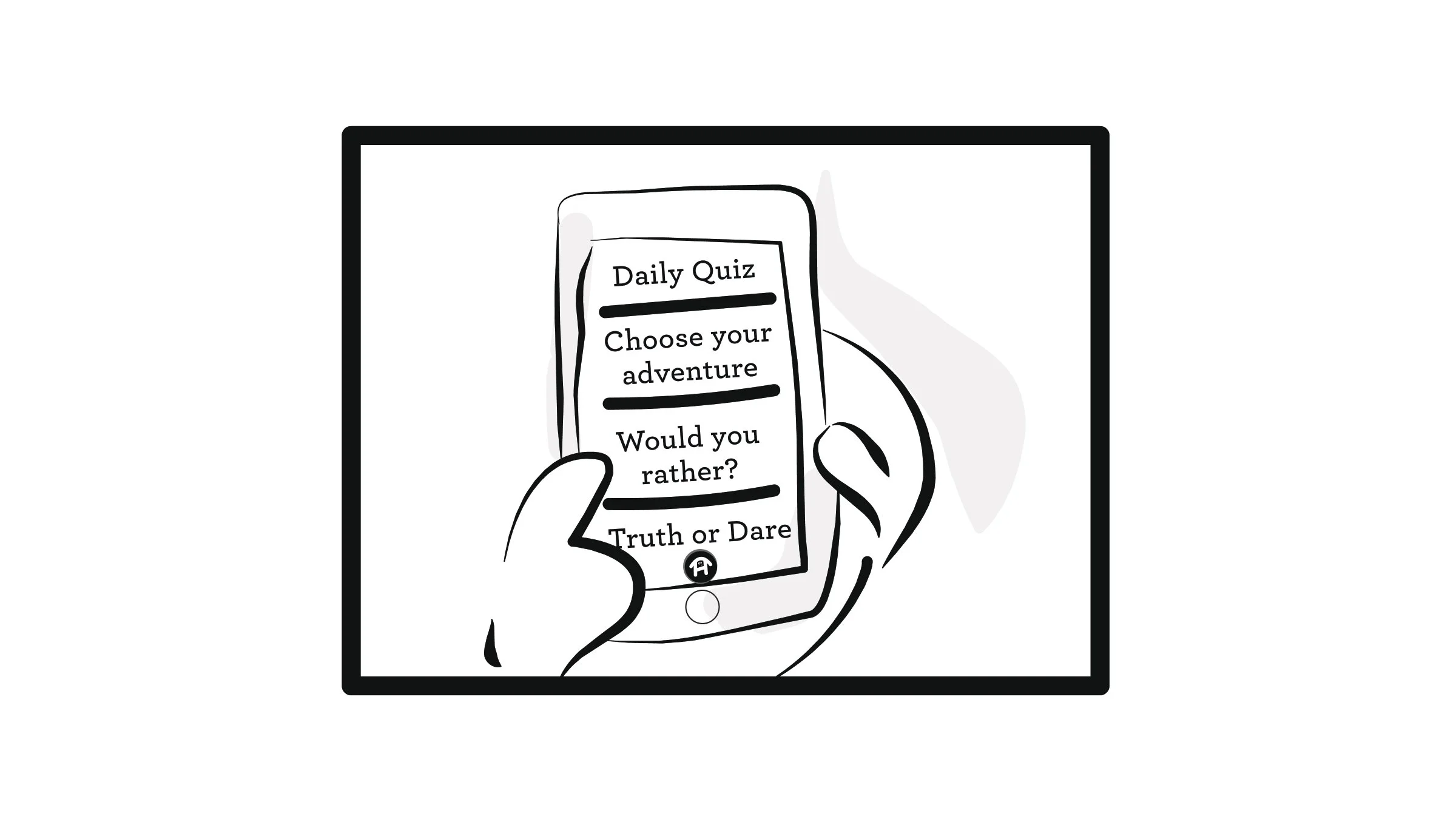
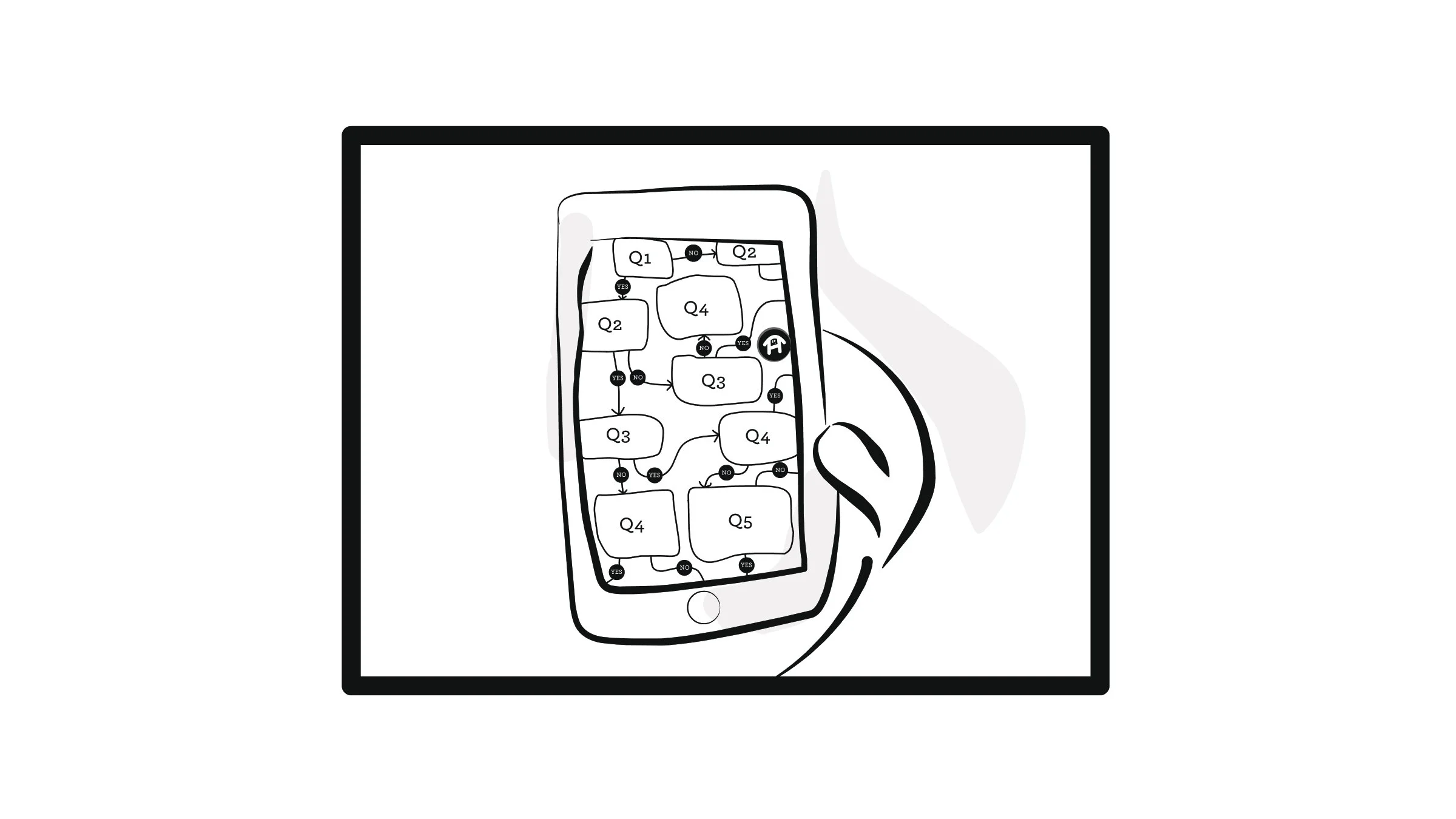
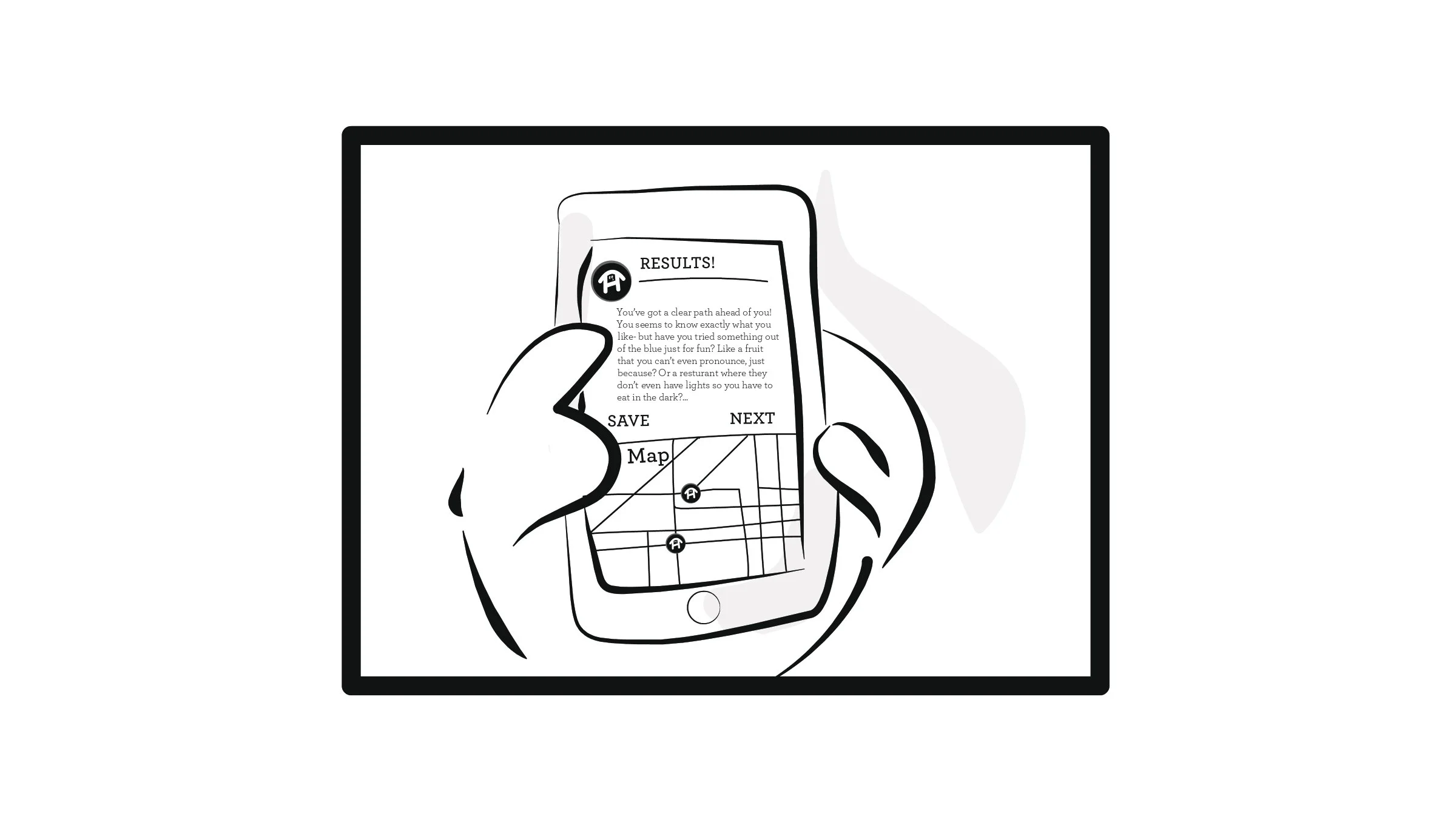
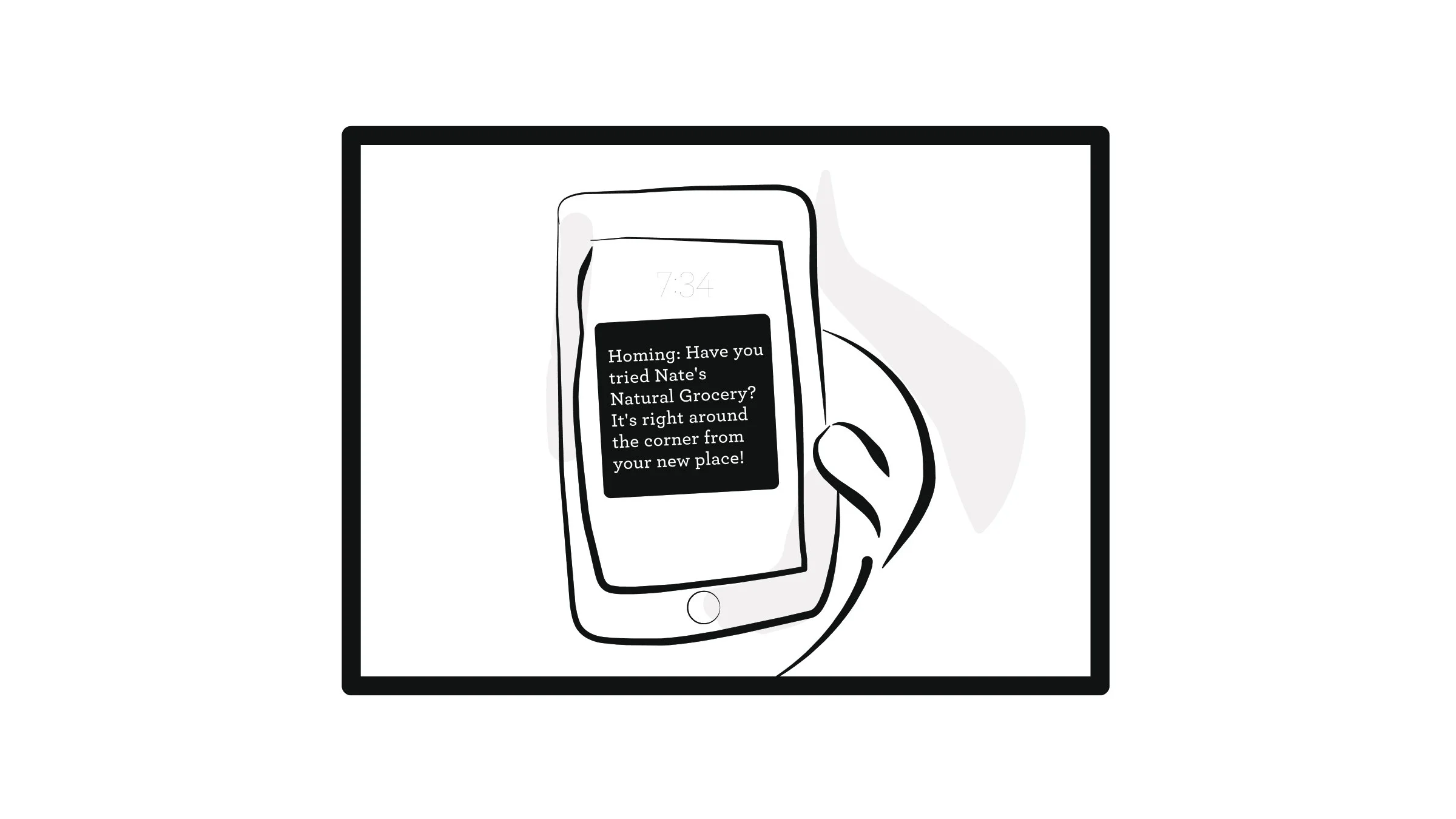
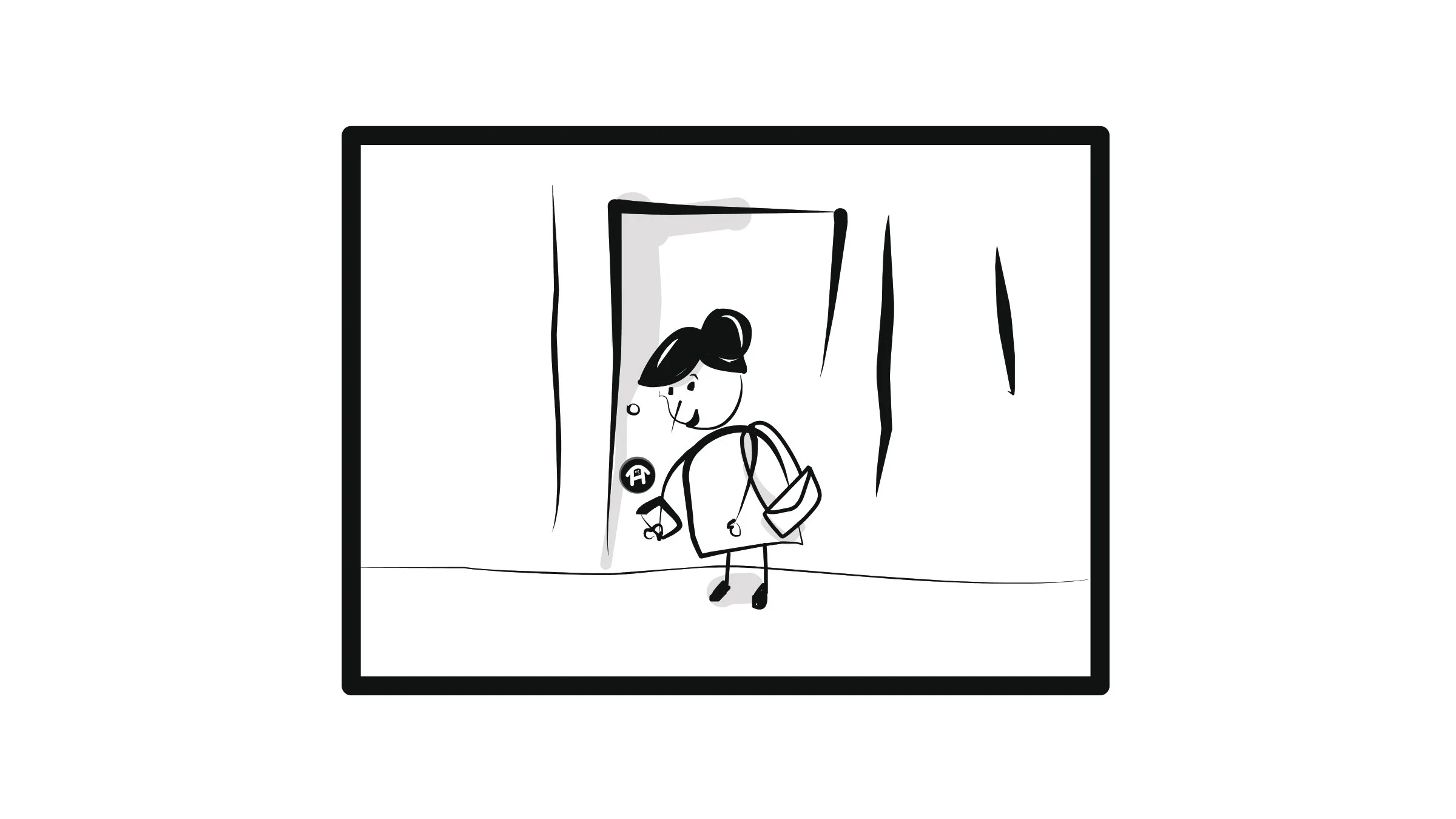
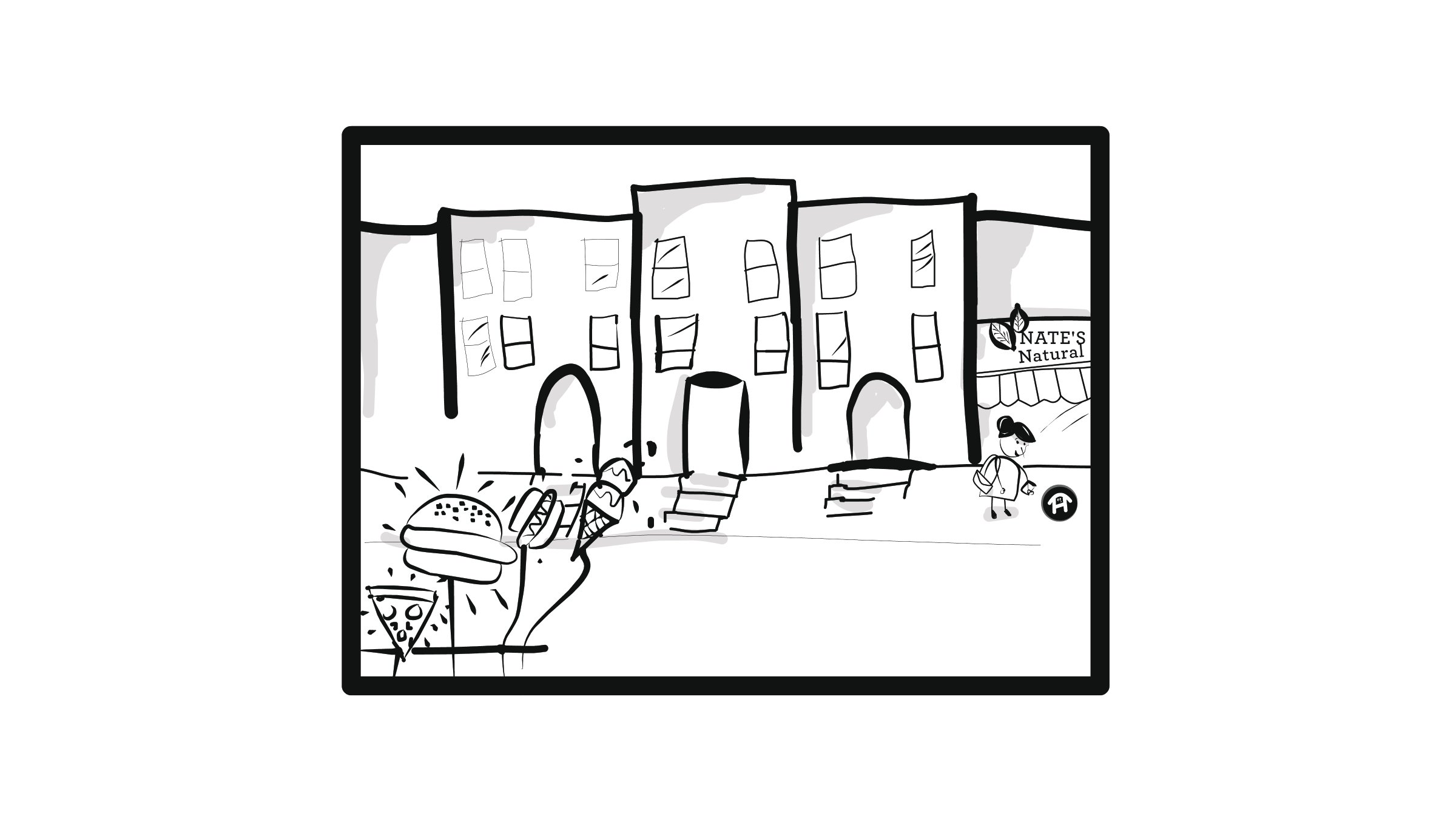
Homing uses playful onboarding (daily quizzes, "Would You Rather," "Choose Your Adventure") to build a low-stakes profile of a user's tastes and openness to trying new things. Rather than overwhelming users with options, it generates a personalized result that gently pushes toward discovery — then surfaces a nearby recommendation tied to where they actually live. The storyboard concept showed a recently moved young woman, overwhelmed and lonely in her new apartment, who gets a Homing notification pointing her to a natural grocery store around the corner. She smiles, grabs her bag, and heads out.
The emotional design logic was deliberate: the app doesn't lecture or inform. It nudges, with warmth and a little personality.